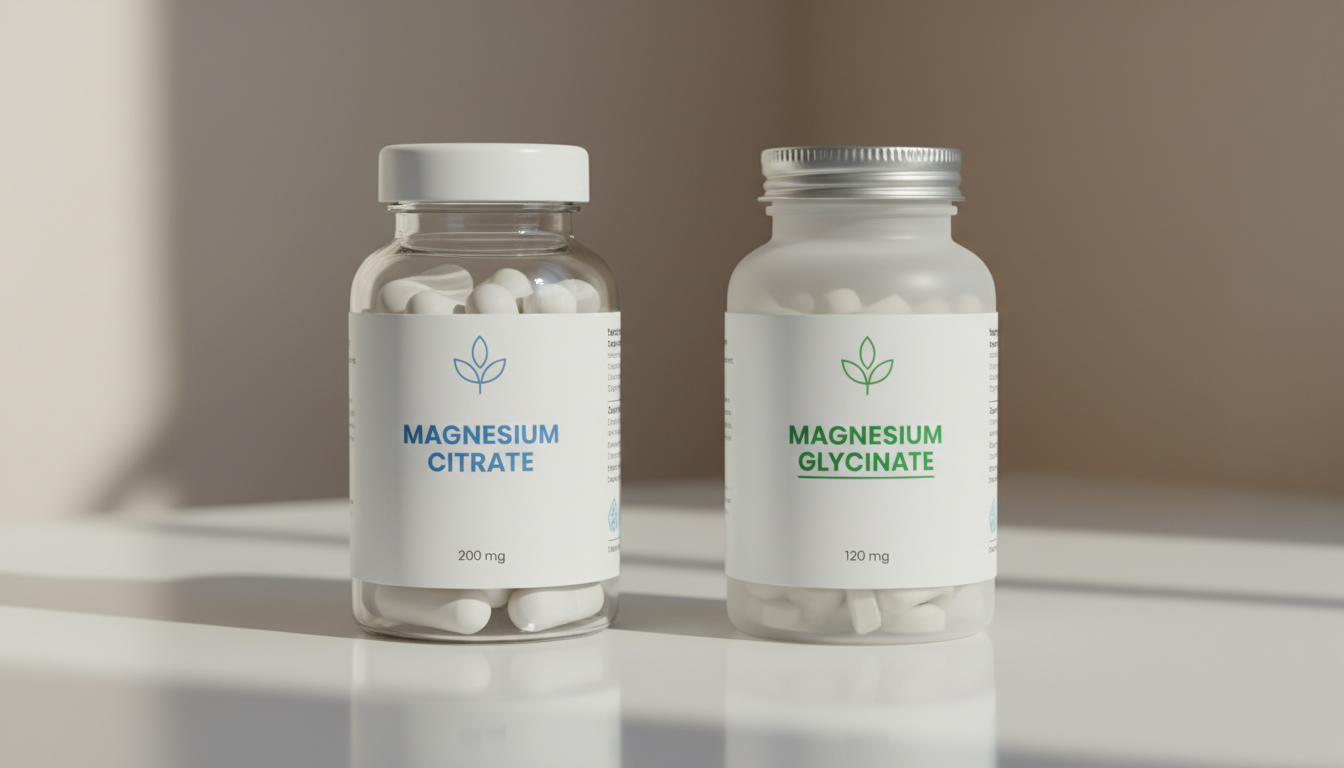
Magnesium Glycinate vs Citrate: Which is Best for Sleep?
If you’re taking magnesium for sleep, you’ve probably wondered: Which form actually works better - glycinate or citrate?
Quick answer: Magnesium glycinate is better for sleep, but citrate has its place too.
Here’s the breakdown:
Magnesium Glycinate (Best for Sleep)
Why it’s superior:
- Bound to glycine (an amino acid that promotes relaxation)
- Highly bioavailable (easy absorption)
- Gentle on stomach (no laxative effect)
- Crosses blood-brain barrier effectively
Best for:
- Sleep optimization
- Anxiety reduction
- Muscle relaxation
- People with sensitive stomachs
Dosage: 300-400mg before bed
My recommendation: If your goal is better sleep, this is the form to choose.
Magnesium Citrate
Pros:
- Good absorption
- Affordable
- Widely available
- Helps with constipation
Cons:
- Laxative effect (can cause diarrhea)
- Less effective for sleep than glycinate
- Can disrupt sleep if you take too much
Best for:
- Constipation relief
- General magnesium deficiency
- Budget-conscious buyers
Dosage: 200-400mg (start low to assess tolerance)
Head-to-Head Comparison
| Feature | Glycinate | Citrate |
|---|---|---|
| Sleep Quality | ⭐⭐⭐⭐⭐ | ⭐⭐⭐ |
| Absorption | ⭐⭐⭐⭐⭐ | ⭐⭐⭐⭐ |
| Stomach Friendly | ⭐⭐⭐⭐⭐ | ⭐⭐ |
| Cost | ⭐⭐⭐ | ⭐⭐⭐⭐⭐ |
| Relaxation | ⭐⭐⭐⭐⭐ | ⭐⭐⭐ |
The Bottom Line
For sleep: Magnesium glycinate wins hands down.
For constipation: Citrate is better.
My protocol: Take 300mg magnesium glycinate 1-2 hours before bed. Avoid citrate at night unless you also need help with constipation.
Some links may be affiliate links. I only recommend products I’ve researched.