If you’ve looked into natural ways to support healthy testosterone levels, zinc probably showed up on your radar pretty fast. And for good reason — it’s one of the most researched minerals when it comes to male hormone health.
But here’s the thing: most of the information out there is either oversimplified (“just take a zinc pill”) or buried in studies that are hard to parse. This article breaks down what zinc actually does for testosterone, who’s most likely deficient, and what the research really says about supplementation.
Why Zinc Matters for Testosterone
Zinc isn’t just a random mineral your body uses occasionally. It’s involved in over 300 enzymatic processes, and several of those directly affect how your body produces and regulates testosterone.
Here’s what’s happening behind the scenes:
- Enzyme support. Zinc is required for the function of 5-alpha-reductase, the enzyme that converts testosterone into dihydrotestosterone (DHT), a more potent androgen. It also plays a role in aromatase regulation, which controls how much testosterone gets converted into estrogen.
- Cellular receptor function. Zinc helps androgen receptors work properly. Think of these receptors as the “locks” that testosterone fits into at the cellular level. Without adequate zinc, those locks don’t work as efficiently — meaning even normal testosterone levels may not have their full effect.
- LH signaling. Luteinizing hormone (LH) is the signal your brain sends to your testes to produce testosterone. Zinc deficiency has been shown to impair this signaling pathway, which directly reduces testosterone output.
The bottom line: zinc doesn’t just slightly bump up testosterone. It’s a structural component of the entire testosterone production and utilization system.
What the Research Says
This isn’t theoretical. There’s solid human research backing the zinc-testosterone connection.
The 1996 study is one of the most frequently cited. Researchers placed young men on a zinc-restricted diet and found that their testosterone levels dropped significantly within weeks. When zinc was reintroduced, levels recovered.
Another notable study examined a group of men with marginal zinc deficiency (not severe, just below optimal). After six months of zinc supplementation, their testosterone levels increased meaningfully compared to the control group.
A 2011 study published in the journal Nutrition looked at elite wrestlers after an intensive training camp — a scenario designed to deplete zinc through sweat and metabolic stress. The wrestlers who supplemented with zinc maintained their testosterone levels, while those who didn’t saw significant declines.
Key takeaway from the research: Zinc supplementation appears most effective in men who are deficient or borderline deficient. If your levels are already optimal, the boost may be modest or nonexistent.
Who’s Actually Deficient?
This is where it gets interesting — and where a lot of guys might be surprised.
The National Institutes of Health (NIH) estimates that roughly 12% of the U.S. population doesn’t get adequate zinc from diet alone. But that number may be misleadingly low for certain groups:
- Men who exercise regularly. Zinc is lost through sweat. If you’re training hard several times a week, your zinc needs are higher than the average sedentary person.
- Men over 40. Absorption efficiency decreases with age. You might be eating enough zinc, but your body isn’t pulling as much of it from food.
- Men on plant-heavy diets. Phytates found in grains, legumes, and seeds bind to zinc and reduce absorption. Vegetarians and vegans may need up to 50% more zinc than meat-eaters to reach the same blood levels.
- Men under chronic stress. High cortisol levels (from ongoing stress) interfere with zinc metabolism and increase urinary zinc excretion.
If you fall into one or more of these categories, there’s a reasonable chance your zinc levels aren’t where they should be.
How Much Zinc Do You Need?
The recommended daily allowance (RDA) for adult men is 11 mg per day. That’s the baseline to prevent deficiency, not necessarily the amount that supports optimal testosterone production.
For men actively looking to support testosterone, many practitioners and researchers suggest 15–30 mg per day through a combination of food and supplementation.
Upper limit: The tolerable upper intake level is 40 mg per day. Going significantly above this on a regular basis can cause copper deficiency (zinc and copper compete for absorption), nausea, and immune dysfunction. More is not better.
Best Food Sources of Zinc
Before reaching for a supplement, it’s worth checking whether your diet covers the basics:
- Oysters — The undisputed champion. A single serving (about 6 medium oysters) delivers over 30 mg of zinc.
- Beef — A 4 oz serving of grass-fed beef provides about 5–6 mg.
- Pumpkin seeds — A quarter cup gives you roughly 2–3 mg. Easy to add to salads or eat as a snack.
- Chicken — About 1 mg per 3 oz serving. Not a heavy hitter, but contributes to daily totals.
- Lentils and chickpeas — Around 1–2 mg per cup cooked. Keep the phytate issue in mind.
For most guys, getting 8–12 mg from food daily is achievable with a balanced diet. The gap — if there is one — is usually small enough that a modest supplement fills it.
Choosing the Right Zinc Supplement
If you decide to supplement, the form matters. Not all zinc supplements are absorbed equally:
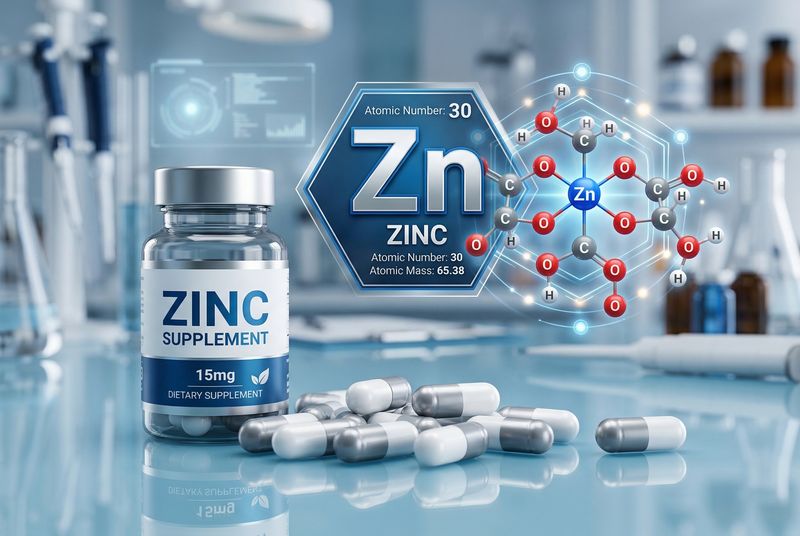
Zinc Picolinate — Generally considered the best-absorbed form. Studies show higher bioavailability compared to zinc oxide and zinc citrate. This is the form most practitioners recommend for testosterone support.
Zinc Citrate — Good absorption, widely available, and typically more affordable than picolinate. A solid second choice.
Zinc Gluconate — Moderate absorption. Common in cold lozenges and general multivitamins.
Zinc Oxide — The cheapest form and the least bioavailable. You’ll find this in a lot of budget supplements. It’s better than nothing, but not ideal if you’re specifically targeting absorption.
Practical recommendation: Zinc picolinate at 15–25 mg per day, taken with food to reduce stomach upset. If you’re also supplementing magnesium or iron, take zinc at a different time — these minerals compete for absorption.
A Common Mistake: Taking Zinc Without Copper
Here’s something most supplement guides skip: if you take zinc daily for more than a few weeks, you should pair it with a small amount of copper (1–2 mg).
Zinc and copper compete for the same absorption pathway. When you increase zinc intake consistently, copper levels can drop. Low copper can lead to fatigue, weakened immune function, and ironically — neurological issues that feel like low testosterone symptoms.
Many quality zinc supplements include copper in the right ratio for this reason. If yours doesn’t, consider adding it separately or taking periodic breaks from zinc supplementation.
The Bigger Picture: Zinc Alone Won’t Fix Everything
Zinc is important. But it’s one piece of a larger puzzle. If your testosterone is low because you’re sleeping four hours a night, eating processed food, not exercising, and carrying 30 extra pounds — no amount of zinc is going to fix that.
The guys who see the best results from optimizing micronutrients like zinc are the ones who already have the basics dialed in:
- Sleep — 7–9 hours consistently. This is the single biggest factor in testosterone production.
- Body fat — Excess adipose tissue converts testosterone into estrogen via the aromatase enzyme. Losing fat is often more effective than any supplement.
- Strength training — Compound movements (squats, deadlifts, presses) with progressive overload create the hormonal stimulus your body needs.
- Stress management — Chronic elevation of cortisol directly suppresses testosterone. Zinc can help mitigate some of this, but it can’t compensate for a lifestyle that keeps stress hormones permanently elevated.
Think of zinc as the oil in your car’s engine. It helps everything run smoothly. But if the engine is broken, oil alone isn’t going to get you down the road.
Signs You Might Benefit from Zinc Supplementation
You don’t need a blood test to start, but certain symptoms suggest it’s worth trying:
- Decreased sense of taste or smell — This is one of the earliest signs of zinc deficiency and is surprisingly specific.
- Frequent colds or slow wound healing — Zinc is critical for immune function.
- Hair thinning — While many things cause hair loss, zinc deficiency accelerates it.
- Low energy or mood — Not unique to zinc deficiency, but when combined with the above, it’s a stronger signal.
- Reduced libido — Can be a symptom of low testosterone, which in turn can be related to low zinc.
If two or more of these resonate, a 30-day trial of 15–25 mg zinc picolinate daily is a reasonable experiment. If you don’t notice anything after a month, your zinc levels probably weren’t the issue.
Summary
- Zinc is directly involved in testosterone production, receptor function, and LH signaling.
- Deficiency is more common than most men realize, especially among athletes, older men, and those on plant-heavy diets.
- 15–25 mg of zinc picolinate per day is a reasonable supplement dose for most men.
- Pair zinc with copper if supplementing long-term, and don’t exceed 40 mg daily.
- Zinc helps, but it’s not a substitute for sleep, exercise, healthy body fat levels, and stress management.
The guys who benefit most from zinc are the ones who need it. If you suspect you might be running low, it’s one of the safest and most affordable supplements you can try. Just keep your expectations grounded — it’s a support nutrient, not a magic bullet.