Natural Ways to Boost Testosterone: 12 Science-Backed Strategies
Before reaching for supplements or TRT, you should optimize your body’s natural testosterone production.
The truth is, most men can increase testosterone 20-40% through lifestyle changes alone.
Here are 12 science-backed natural strategies to boost your testosterone.
Why Natural Methods Matter
Benefits of natural optimization:
- No side effects
- Sustainable long-term
- Improves overall health
- Cost-effective
- Works with your body’s systems
The foundation: Testosterone production depends on:
- Sleep quality
- Stress levels
- Nutrient status
- Body composition
- Physical activity
Fix these first, then consider supplements.
1. Optimize Your Sleep
The Research
Studies show:
- 5 hours of sleep = 15% testosterone reduction
- Sleep restriction for 1 week = 10-15% T drop
- Sleep apnea patients have significantly lower T
What to Do
Sleep 7-9 hours per night:
- Most testosterone is produced during REM sleep
- Sleep quality matters as much as quantity
- Consistent sleep schedule is crucial
Optimize sleep environment:
- Room temperature: 65-68°F
- Complete darkness (use blackout curtains)
- No screens 1-2 hours before bed
- Quiet environment (use white noise if needed)
Sleep hygiene:
- Same bedtime every night (even weekends)
- No caffeine after 2 PM
- Limit alcohol (disrupts REM sleep)
- Take magnesium before bed (300-400mg)
Expected T boost: 10-20% improvement with consistent quality sleep
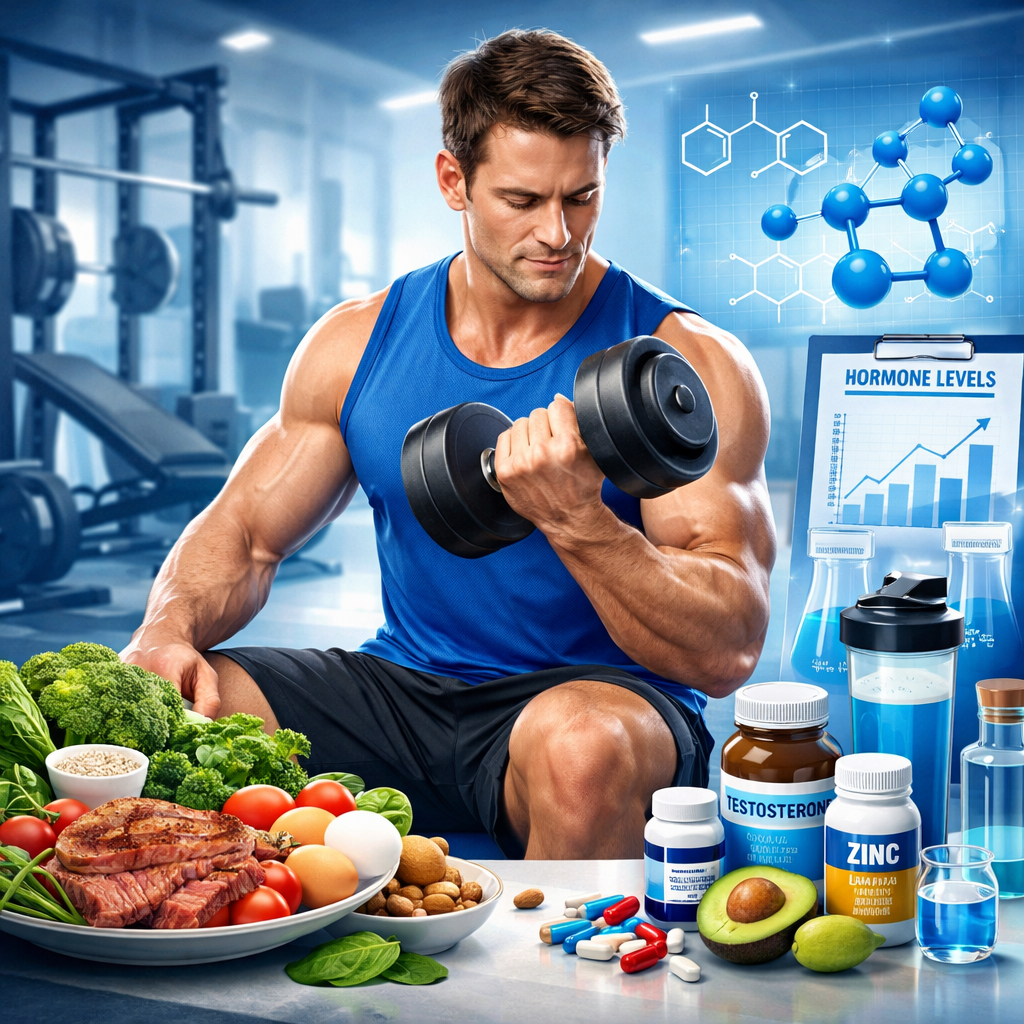
2. Lift Heavy Weights
The Research
Resistance training:
- Acute T boost: 15-40% immediately post-workout
- Long-term T increase: 10-25% with consistent training
- Compound movements > isolation exercises
What to Do
Focus on compound lifts:
- Deadlifts
- Squats
- Bench press
- Rows
- Overhead press
Training guidelines:
- Frequency: 3-4 days per week
- Volume: 3-5 sets per exercise
- Reps: 5-8 reps (heavy)
- Rest: 2-3 minutes between sets
Progressive overload:
- Increase weight regularly
- Track your lifts
- Aim for strength gains
Avoid:
- Overtraining (too much volume)
- Excessive cardio (can lower T)
- Very long workouts (>60-90 minutes)
Expected T boost: 15-25% with consistent heavy lifting
3. Lose Excess Body Fat
The Research
Body fat and testosterone:
- Obesity reduces T by 25-50%
- Fat cells convert testosterone to estrogen
- Visceral fat increases inflammation (lowers T)
What to Do
Target a healthy body fat percentage:
- Men: 10-20% body fat (optimal range)
- Obesity: >25% body fat (T significantly reduced)
Fat loss strategies:
- Calorie deficit (300-500 below maintenance)
- High protein (1g per lb bodyweight)
- Strength training (preserves muscle)
- Moderate cardio (20-30 min, 2-3x/week)
Avoid:
- Crash diets (lowers T temporarily)
- Very low-fat diets (fats needed for T production)
- Rapid weight loss (>2 lbs/week)
Expected T boost: 20-30% when going from obese to lean
4. Manage Stress
The Research
Stress and testosterone:
- High cortisol directly suppresses testosterone
- Chronic stress can reduce T by 20-30%
- Stress reduces sleep quality (double whammy)
What to Do
Daily stress management:
- Meditation: 10-20 minutes daily
- Nature exposure: 20-30 minutes outdoors
- Deep breathing: 5 minutes when stressed
- Journaling: Write down thoughts before bed
Lifestyle changes:
- Set boundaries (work, relationships)
- Prioritize recovery (rest days, sleep)
- Limit news/social media
- Practice saying “no”
Consider adaptogens:
- Ashwagandha (300-600mg daily)
- Reduces cortisol 20-30%
- Indirectly boosts testosterone
Expected T boost: 10-15% with consistent stress management
5. Get Enough Vitamin D
The Research
Vitamin D and testosterone:
- Men with low D have lower T
- Supplementing D3 can increase T 20-25%
- Most people are deficient (50-80%)
What to Do
Get tested:
- Target: 50-70 ng/mL blood levels
- Optimal: 60+ ng/mL for T production
Sun exposure:
- 15-20 minutes midday (without sunscreen)
- Expose large skin areas
- Best: chest, back, legs
Supplementation:
- Vitamin D3: 5,000 IU daily (most people)
- With K2: 100mcg (prevents calcium buildup)
- Take with fatty meal (fat-soluble)
Expected T boost: 20-25% if you were deficient
6. Eat Enough Zinc
The Research
Zinc and testosterone:
- Zinc deficiency reduces T 20-30%
- Zinc supplementation increases T in deficient men
- Lost through sweat (athletes need more)
What to Do
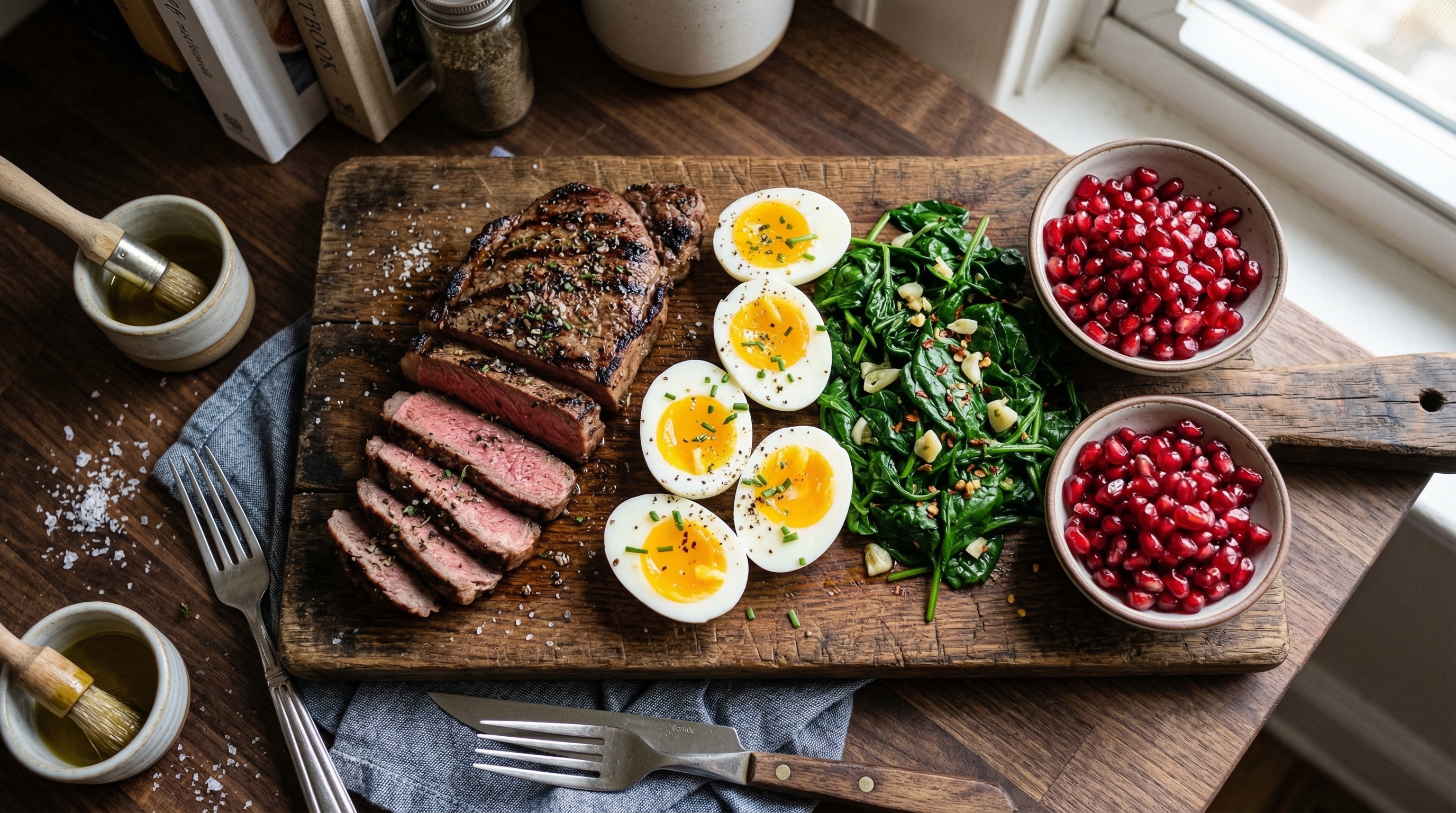
Zinc-rich foods:
- Oysters (74mg per serving - highest source)
- Beef (7mg per serving)
- Pumpkin seeds (2mg per 1/4 cup)
- Cashews (1.6mg per 1/4 cup)
- Chickpeas (2.5mg per cup)
Supplementation:
- Dosage: 30mg daily (if not getting enough from food)
- Form: Zinc picolinate or citrate (better absorption)
- Don’t exceed: 40mg daily (can cause copper deficiency)
Avoid:
- Zinc oxide (poor absorption)
- Very high doses (>100mg - counterproductive)
Expected T boost: 10-15% if you were deficient
7. Optimize Magnesium Intake
The Research
Magnesium and testosterone:
- Magnesium increases free testosterone
- Most people are deficient (50-80%)
- Critical for over 300 biochemical reactions
What to Do
Magnesium-rich foods:
- Dark chocolate (65mg per ounce)
- Avocados (58mg per avocado)
- Nuts (almonds: 80mg per ounce)
- Leafy greens (spinach: 157mg per cup cooked)
- Seeds (pumpkin seeds: 156mg per ounce)
Supplementation:
- Form: Magnesium glycinate (best for absorption)
- Dosage: 400mg daily (200mg twice daily)
- Timing: Evening (promotes sleep)
Expected T boost: 10-15% with adequate levels
8. Eat Healthy Fats
The Research
Dietary fat and testosterone:
- Low-fat diets reduce T 10-15%
- Testosterone is synthesized from cholesterol
- Healthy fats support hormone production
What to Do
Healthy fat sources:
- Avocados (15g fat per fruit)
- Olive oil (14g per tablespoon)
- Nuts (almonds: 14g per 1/4 cup)
- Eggs (5g per egg, eat the yolk)
- Fatty fish (salmon: 20g per serving)
Target intake:
- 25-35% of calories from fat
- For 2,500 calorie diet: 70-95g fat daily
Avoid:
- Trans fats (processed foods)
- Very low-fat diets (<20% calories)
- Excessive saturated fat (balance is key)
Expected T boost: 10-15% with adequate healthy fats
9. Limit Alcohol
The Research
Alcohol and testosterone:
- Heavy drinking reduces T 20-30%
- Even moderate intake can lower T temporarily
- Alcohol increases estrogen conversion
What to Do
Recommendations:
- Limit: 1-2 drinks per day maximum
- Avoid: Binge drinking (4+ drinks in 2 hours)
- Best: No alcohol for optimal T
If you drink:
- Choose clear alcohols (vodka, gin)
- Avoid beer (contains phytoestrogens)
- Drink water between alcoholic drinks
- Don’t drink before bed (disrupts sleep)
Expected T boost: 10-20% by reducing/eliminating alcohol
10. Avoid Endocrine Disruptors
The Research
Environmental toxins:
- BPA, phthalates, parabens reduce T
- Pesticides disrupt hormone production
- Plastics leach estrogen-mimicking compounds
What to Do
Reduce exposure:
- Use glass or stainless steel (not plastic)
- Don’t microwave plastic containers
- Choose organic when possible
- Use natural personal care products
Avoid:
- Canned foods (BPA in lining)
- Plastic water bottles (especially in heat)
- Conventional cleaning products
- Synthetic fragrances
Detox support:
- Eat cruciferous vegetables (broccoli, cabbage)
- Support liver health (milk thistle, turmeric)
- Sweating (exercise, sauna)
Expected T boost: 5-10% by reducing toxin exposure
11. High-Intensity Interval Training (HIIT)
The Research
HIIT and testosterone:
- Short intense bursts boost T more than steady cardio
- Improves insulin sensitivity (supports T)
- Doesn’t increase cortisol like long cardio
What to Do
HIIT protocol:
- Warm-up: 5 minutes
- Intervals: 30 seconds all-out, 90 seconds rest
- Repeats: 10-15 intervals
- Total time: 20-25 minutes
Frequency: 2-3x per week
Options:
- Sprinting
- Rowing machine
- Stationary bike
- Jump rope
- Burpees
Avoid:
- Long steady-state cardio (>45 min)
- Overtraining HIIT (quality over quantity)
Expected T boost: 10-15% with consistent HIIT
12. Maintain a Healthy Weight
The Research
Weight and testosterone:
- Being overweight reduces T 25-40%
- Underweight can also lower T
- Optimal: BMI 18.5-24.9
What to Do
If overweight:
- Calorie deficit (300-500 daily)
- High protein diet
- Strength training + moderate cardio
- Aim for 1-2 lbs loss per week
If underweight:
- Calorie surplus (300-500 daily)
- Eat every 3-4 hours
- Strength training (builds muscle)
- Focus on nutrient-dense foods
Target:
- BMI: 18.5-24.9
- Waist circumference: <40 inches (men)
- Body fat: 10-20% (optimal)
Expected T boost: 20-40% when reaching healthy weight
The Ultimate Natural Testosterone Protocol
Daily Routine:
Morning:
- 7-9 hours sleep ✅
- 15-20 minutes sun exposure ✅
- High-protein breakfast ✅
- 5,000 IU Vitamin D3 ✅
Afternoon:
- Strength training (3-4x/week) ✅
- Healthy lunch with fats ✅
- Stress management break ✅
Evening:
- HIIT workout (2-3x/week) ✅
- Limit alcohol ✅
- Magnesium before bed ✅
- No screens 1-2 hours before sleep ✅
Weekly:
- 3-4 strength training sessions
- 2-3 HIIT sessions
- 1-2 rest days
- Nature exposure
Monthly:
- Track progress (weight, strength, energy)
- Adjust as needed
- Consider blood work
Expected Results Timeline
| Week | Expected Benefits |
|---|---|
| 1-2 | Better sleep, more energy |
| 4-6 | Improved mood, increased libido |
| 8-12 | Strength gains, body composition changes |
| 12+ | Optimized testosterone levels |
The Bottom Line
Natural testosterone optimization works, but it requires consistency across multiple areas:
Priority Order:
- Sleep (7-9 hours, quality sleep)
- Diet (adequate protein, fats, micronutrients)
- Exercise (heavy lifting + HIIT)
- Stress management (cortisol reduction)
- Body composition (healthy weight)
Realistic expectations:
- Natural methods: 20-40% T increase (if you had suboptimal habits)
- Supplements: Additional 10-20% on top of lifestyle
- TRT: 200-400% increase (but with risks and side effects)
My recommendation: Optimize lifestyle first (this article), then consider supplements (Testosil), and only explore TRT if medically necessary.
Most important: Consistency is key. These changes work together synergistically - doing all 12 will have a much larger effect than doing just 1 or 2.
Disclaimer: This article is for informational purposes only and is not medical advice. Always consult a healthcare professional before making significant changes to diet, exercise, or supplement regimens.